
Painting a 5 Marla house is an important part of home construction, renovation, or maintenance. Whether you are moving into a newly built house or refreshing your existing walls, estimating the right amount of paint can help you manage your budget, reduce waste, and achieve a consistent finish.
However, the amount of paint required for a 5 Marla house depends on more than the plot size. The number of storeys, covered area, wall dimensions, ceiling height, surface condition, and number of coats all affect the final quantity.
A single-storey house and a double-storey house on the same 5 Marla plot can have significantly different paint requirements.
In this guide, we will explain how to calculate paint quantity for a 5 Marla house in Pakistan, estimate the paintable area, account for primer and wall preparation, and choose suitable paints for interior and exterior surfaces.
What Affects Paint Quantity in a 5 Marla House?
Before purchasing paint, consider the following factors.
1. Single-Storey vs Double-Storey Construction
A single-storey house generally has less interior wall area than a double-storey house with a similar layout. Adding another floor introduces additional rooms, walls, ceilings, and other surfaces that may need painting.
However, a double-storey house does not necessarily require exactly twice as much paint. Staircases, room sizes, open spaces, and the overall floor plan can change the total area.
2. Covered Area and Room Dimensions
A 5 Marla plot does not mean that the entire plot area will need paint. Some space may be occupied by an open courtyard, driveway, or other uncovered areas.
For a more accurate estimate, measure the actual rooms and other surfaces that need painting. If you have a house plan, use it to identify room dimensions, wall heights, and ceiling areas.
3. Interior Walls and Exterior Walls
Interior and exterior surfaces should be calculated separately because they may require different paint products and preparation methods.
Interior painting may include:
- Bedrooms and living rooms
- Drawing and dining rooms
- Kitchens and other painted areas
- Hallways and staircases
- Ceilings
Exterior painting may include:
- Front elevation
- Side and rear walls
- Boundary walls, if included in the project
- Other exposed surfaces
Separating these areas helps you select appropriate products and estimate their quantities more accurately.
4. Number of Coats
Most painting projects require more than one coat to achieve an even finish. The actual number depends on the paint, existing colour, wall condition, and application instructions.
For example, if you need to cover 1,000 square feet of wall with two coats, your total coverage requirement is 2,000 square feet.
Total coat-area = Paintable surface area × Number of coats
This figure represents the area covered across all coats, not the number of litres required.
5. Wall Condition and Preparation
Newly plastered walls, previously painted walls, and damaged walls can have different preparation requirements.
Cracks, uneven surfaces, stains, and excessive porosity may increase material consumption or require additional preparation.
Before painting, assess whether the walls need filling, putty, primer, sealer, or other preparation products. Follow the selected product's instructions to determine which materials are necessary.
How to Calculate Paint Quantity for a 5 Marla House
The most reliable way to estimate paint requirements is to calculate the area of each surface and then use the selected paint's verified coverage rate.
You can follow these steps to estimate the quantity for your house.
Step 1: Calculate the Wall Area
For a rectangular room, use this formula:
Gross wall area = 2 × (Room length + Room width) × Wall height
For example, consider a bedroom with the following dimensions:
| Measurement | Size |
|---|---|
| Room length | 12 feet |
| Room width | 10 feet |
| Wall height | 10 feet |
Using the formula:
Gross wall area = 2 × (12 + 10) × 10
Gross wall area = 440 square feet
This is the total area of the four walls before deducting doors and windows.
Step 2: Subtract Doors and Windows
Doors and windows generally do not require the same wall paint as the surrounding surfaces, so their areas should be deducted when calculating wall paint requirements.
Suppose the bedroom has:
| Opening | Area |
|---|---|
| Door | 21 sq ft |
| Window | 39 sq ft |
| Total openings | 60 sq ft |
The calculation becomes:
Net wall area = 440 − 60
Net paintable wall area = 380 square feet
Measure the actual openings in your room for a more accurate estimate.
Step 3: Account for the Number of Coats
Suppose you plan to apply two coats of paint to the bedroom walls.
Total coat-area = 380 × 2
Total coat-area = 760 square feet
This is the total surface coverage needed across both coats.
Step 4: Calculate the Required Paint Quantity
Once you know the total coat-area, check the coverage rate specified for your chosen paint.
Use this formula:
Paint required (litres) = Total coat-area ÷ Coverage per litre
For illustration, suppose the selected paint has a verified coverage rate of 100 square feet per litre per coat under the relevant application conditions.
For the example bedroom:
Paint required = 760 ÷ 100
Paint required = 7.6 litres
This is a hypothetical calculation, not a coverage claim for any Triangle Paints product. Actual coverage varies with the product, surface condition, application method, and other factors.
Always check the relevant product's technical information before finalising your purchase.
Step 5: Calculate Ceiling Paint Separately
Ceilings should be measured separately if they are also being painted.
For a rectangular room:
Ceiling area = Room length × Room width
For the 12 ft × 10 ft bedroom:
Ceiling area = 12 × 10
Ceiling area = 120 square feet
If the ceiling requires two coats, its total coat-area will be 240 square feet.
Use the recommended product and coverage rate for the ceiling surface to estimate its paint requirements.
Repeat these calculations for every room and surface included in your project.
Interactive planning tool
Estimate paint, primer and cost.
Enter the paintable area of each surface, the number of coats and the coverage and price assumptions you want to use. The estimator converts area into a rough paint volume, a primer quantity and an indicative cost breakdown. All rates are editable and are planning assumptions, not a quotation.
Use the interactive estimator below to put these steps together. Enter the paintable area for interior walls, ceilings, exterior walls and enamel surfaces, set the number of coats, and adjust the coverage and price assumptions. The tool converts the area into a rough paint volume, adds an optional primer and putty estimate, and shows an indicative cost breakdown.
The rates in the calculator are editable planning assumptions, not Triangle Paints product data. Replace them with the figures for your selected product, and treat every result as a rough guide rather than a quotation.
Understanding your estimate
The estimator keeps interior walls, ceilings, exterior walls and enamel surfaces separate because they usually use different products and coverage rates. Primer and putty are calculated from the interior and exterior wall area only.
Every result is an approximation. Confirm the exact quantity and a current price with Triangle Paints before you buy, because surface condition, colour change and application method can all change the final figure.
How Much Paint Is Needed for a Single-Storey 5 Marla House?
A single-storey 5 Marla house typically has fewer interior surfaces to paint than a comparable double-storey house. However, the exact quantity depends on its layout and covered area.
Instead of relying on a fixed estimate, calculate the paintable area room by room.
Start by measuring:
- Bedrooms and their walls.
- Living, drawing, and dining rooms.
- Kitchens and hallways.
- Bathrooms and other areas where painting is planned.
- Ceilings.
- Exterior walls and the front elevation.
- Boundary walls, if included.
Deduct doors and windows from the relevant wall measurements, and keep interior and exterior calculations separate.
Once you have the areas, multiply each by the required number of coats and divide by the relevant product's verified coverage rate.
Example: Estimating the Paintable Area
Consider a hypothetical single-storey house with these measurements:
| Surface | Paintable area |
|---|---|
| Interior walls after deducting openings | 2,800 sq ft |
| Ceilings | 1,000 sq ft |
| Exterior walls after deducting openings | 900 sq ft |
These figures are illustrative only. They are not standard measurements for every 5 Marla house.
Assume two coats are required on each surface.
| Surface | Area | Coats | Total coat-area |
|---|---|---|---|
| Interior walls | 2,800 sq ft | 2 | 5,600 sq ft |
| Ceilings | 1,000 sq ft | 2 | 2,000 sq ft |
| Exterior walls | 900 sq ft | 2 | 1,800 sq ft |
| Total | 4,700 sq ft | 9,400 sq ft |
Although the total coat-area is 9,400 square feet, you should not calculate the entire paint quantity using one coverage rate.
Interior walls, ceilings, and exterior walls may require different products. Calculate the quantity for each category using its corresponding coverage information.
This approach provides a more useful estimate for budgeting and purchasing materials.
How Much Paint Is Needed for a Double-Storey 5 Marla House?
A double-storey 5 Marla house requires a separate calculation for each floor.
The additional floor usually increases the total interior wall and ceiling area. Exterior requirements also depend on the building's height, layout, and exposed surfaces.
To estimate the quantity, follow these steps:
1. Measure the ground floor. Calculate the paintable wall area of each room, hallway, and other included space. Measure the ceilings separately.
2. Measure the first floor. Repeat the same process for the bedrooms, living spaces, corridors, and ceilings on the upper floor.
3. Include the staircase. Stairwells and staircases may have high walls or sloping surfaces that require additional measurements.
4. Calculate exterior surfaces. Measure the exposed front, rear, and side walls that need painting. Account for windows, doors, and other openings.
5. Separate the paint types. Calculate interior and exterior requirements independently, using the coverage information for each selected product.
6. Account for preparation materials. Estimate primer and other preparation products separately according to the condition of the surfaces and the relevant product instructions.
A double-storey house will generally need more paint than a comparable single-storey house, but its exact requirements depend on the actual paintable area rather than the number of floors alone.
Don't Forget Primer and Wall Preparation
Estimating the topcoat paint is only one part of planning a painting project.
The condition of your walls and the type of finish you want will determine whether additional preparation materials are required.
Primer
Primer helps prepare suitable surfaces for subsequent paint application. The appropriate primer depends on the substrate, its condition, and the paint system being used.
Newly plastered walls, previously painted walls, and other surfaces may have different preparation requirements.
Calculate primer quantities separately using the surface area, recommended application rate, and number of coats specified for the selected product.
Explore Triangle Paints Primers to review the available options.
Wall Putty and Filling Materials
Wall putty and filling materials may be used to address surface imperfections and prepare walls for a smoother finish.
However, the quantity required depends on the condition of the walls and the recommended application thickness.
Do not assume every wall needs the same amount of putty. Assess the surface first and follow the selected product's application instructions.
You can explore Triangle Paints Wall Preparation Products for relevant options.
Surface Sealer and Other Preparation Products
Depending on the wall condition and selected paint system, a suitable sealer or another preparation product may also be necessary.
Follow the manufacturer's recommendations rather than automatically applying every preparation product to every surface.
Proper preparation helps establish a suitable base for the finish coat and can reduce problems associated with an unsuitable or poorly prepared surface.
Which Triangle Paints Products Should You Consider?
Once you have estimated the paintable area, the next step is to select products suitable for the surfaces you intend to paint.
Triangle Paints offers product categories for different painting requirements. Your selection should depend on whether you are painting interior walls, exterior walls, or other surfaces.
Interior Paints for Living Spaces
Interior walls benefit from a paint selected for the intended room, desired finish, and expected usage.
Consider the requirements of bedrooms, living rooms, hallways, and other interior spaces before choosing a product.
Compare the available options in the Triangle Paints Interior Paints collection.
Before calculating the final quantity, check the selected product's coverage information and recommended number of coats.
Exterior Paints for Outside Walls
Exterior surfaces are exposed to sunlight, rain, temperature changes, and environmental conditions.
Choose a product specifically suitable for the intended exterior surface and local exposure conditions.
Explore the Triangle Paints Exterior Paints collection to review the available options.
When calculating exterior paint requirements, measure the exposed walls separately from the interior surfaces. This makes it easier to estimate quantities and purchase the appropriate materials.
Enamels for Wood and Metal
Doors, windows, grills, railings and gates usually need a durable enamel finish rather than wall emulsion.
Estimate enamel quantities separately from wall paint, using the surface area and the selected enamel's coverage information.
Explore the Triangle Paints Enamels collection to review the available options.
Primers and Wall Preparation Products
Before selecting the final paint, determine whether the surface needs a primer, putty, or another preparation material.
The appropriate products and quantities will depend on the wall condition and the manufacturer's recommendations.
Review the Triangle Paints Primers and Wall Preparation categories when planning your project.
Tip: Do not purchase paint based solely on the number of rooms or the size of your plot. Calculate the actual paintable area and check the selected product's coverage information first.
Common Mistakes to Avoid When Estimating Paint Quantity
Even a carefully planned painting project can run into problems if the initial estimate is inaccurate.
Here are some common mistakes to avoid.
1. Treating 5 Marla as the Paintable Area
Marla is a unit of land measurement, not a measurement of wall area.
The plot's dimensions do not tell you how many square feet of walls and ceilings need painting.
Use your house plan or actual measurements to calculate the relevant surfaces.
2. Ignoring the Number of Coats
Calculating paint for a single coat when two coats are planned can result in an insufficient quantity.
Multiply each surface's paintable area by the required number of coats before calculating litres.
3. Mixing Interior and Exterior Estimates
Interior and exterior surfaces may require different paint products and coverage rates.
Calculate each category separately rather than using a single coverage assumption for the entire house.
4. Forgetting Ceilings and Staircases
Ceilings and staircases can add a significant amount of paintable area.
Include them in the estimate if they are part of your painting project.
5. Ignoring Wall Condition
Rough, porous, damaged, or previously untreated surfaces may consume more material than properly prepared surfaces.
Inspect the walls and account for necessary preparation before purchasing paint.
6. Assuming Every Paint Covers the Same Area
Different products can have different coverage rates, and actual coverage depends on application conditions.
Use the coverage information for the specific product you intend to buy. Avoid applying one product's coverage rate to every paint in your project.
7. Buying Paint Without a Final Measurement
An estimate based only on the plot size or a neighbour's house can result in unnecessary expenditure or insufficient material.
Measure the surfaces, calculate the required coat-area, and verify the product's coverage before finalising your purchase.
Frequently Asked Questions
1. How much paint is required for a 5 Marla house in Pakistan?
The quantity depends on the house's covered area, number of storeys, wall dimensions, ceilings, exterior surfaces, number of coats, and selected paint products.
There is no single quantity that accurately applies to every 5 Marla house. Calculate the paintable area and use the relevant product's coverage rate to estimate the required litres.
2. Does a double-storey 5 Marla house need twice as much paint?
Not necessarily. A double-storey house generally has more interior wall and ceiling area, but the exact difference depends on the floor plans, room dimensions, staircase, and exterior surfaces.
Measure both floors to obtain a more accurate estimate.
3. Should I include ceilings when calculating paint quantity?
Yes, if you intend to paint them.
Calculate ceiling area separately by multiplying the room's length by its width. Then account for the number of coats and the selected product's coverage rate.
4. How do I calculate exterior paint for a 5 Marla house?
Measure the height and width of each exterior wall that needs painting.
For a rectangular wall:
Wall area = Wall width × Wall height
Add the areas of the relevant walls, deduct openings that will not be painted, and multiply the resulting paintable area by the number of coats.
Calculate the paint quantity using the coverage information for your selected exterior paint.
5. Do I need to calculate primer separately?
Yes. If primer is required for your chosen paint system, calculate its quantity separately using the surface area and the manufacturer's recommended coverage and application instructions.
Primer and finish paint are different materials, so their coverage rates should not be assumed to be identical.
6. How can I reduce paint wastage?
Start with accurate measurements, account for openings, and calculate each surface separately.
Choose the appropriate product for each surface and follow the recommended application instructions. Avoid purchasing based solely on estimates for other houses, as their layouts and wall conditions may differ.
7. How can I calculate paint quantity more accurately?
Use a house plan or measure each room's length, width, and wall height. Calculate the paintable wall area, deduct relevant openings, and include ceilings and exterior surfaces where necessary.
Multiply each area by the number of coats and divide by the selected product's verified coverage rate.
You can also use the Triangle Paints paint quantity calculator to help calculate the paintable area for your project.
Final Thoughts
Calculating paint quantity for a 5 Marla house in Pakistan becomes much easier when you break the project into smaller areas.
Measure the interior walls, ceilings, and exterior surfaces separately. Account for doors, windows, the number of coats, and any preparation work. Then use the coverage information for your selected paint to estimate the required quantity.
Whether you are painting a single-storey house or a double-storey home, accurate measurements are the foundation of a practical paint budget.
Before purchasing materials, review your wall condition and choose suitable products for each surface.
Explore Triangle Paints Interior Paints, Exterior Paints, Enamels, Primers, and Wall Preparation Products to help plan your next painting project.
Plan your painting project with Triangle Paints and choose the right products for your home's walls.
Relevant products
Products for walls, ceilings, exteriors and preparation
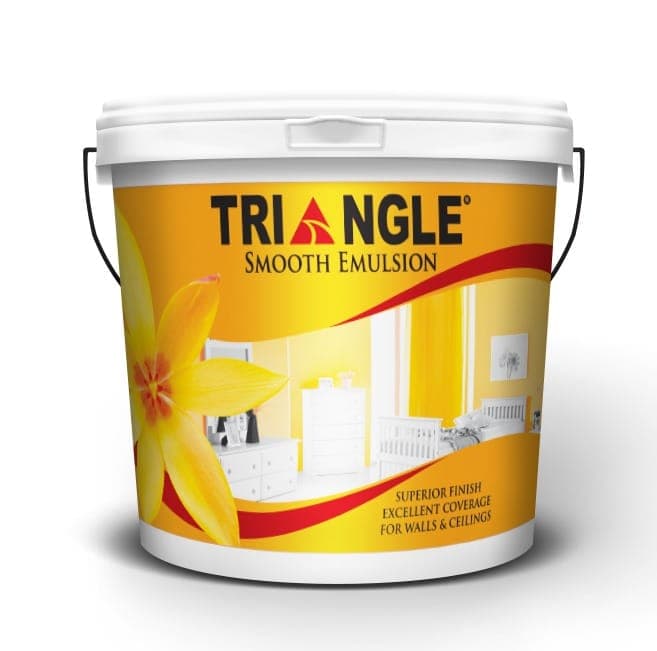
Supreme Smooth Emulsion
A superior-finish interior emulsion with excellent coverage for walls and ceilings.
Bucket — 14.56 L · Gallon — 3.64 L · Quarter — 0.91 LView product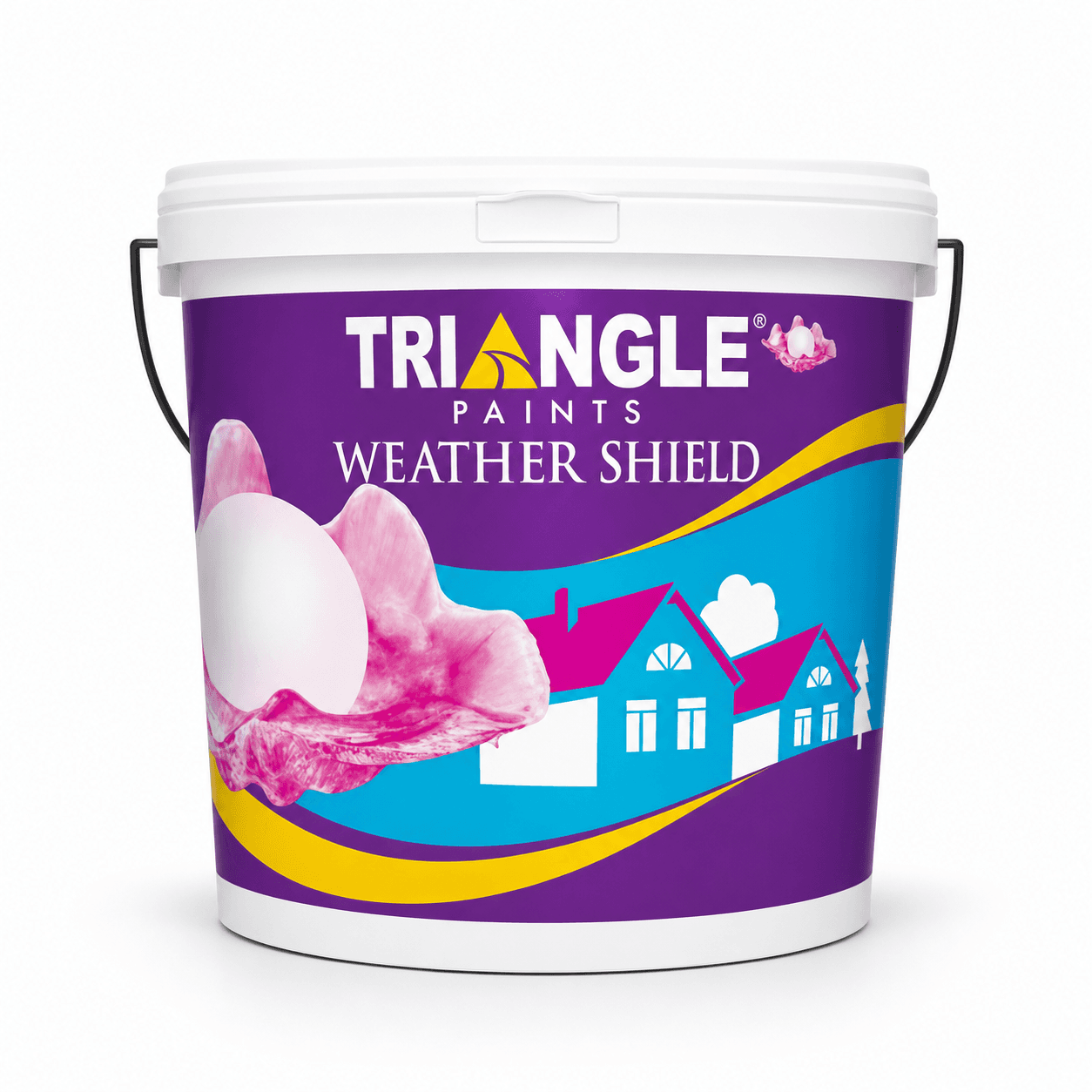
Supreme Weather Shield
A superior-finish exterior coating with a dedicated weather colour bank.
Bucket — 16 L · Gallon — 4 L · Quarter — 1 LView product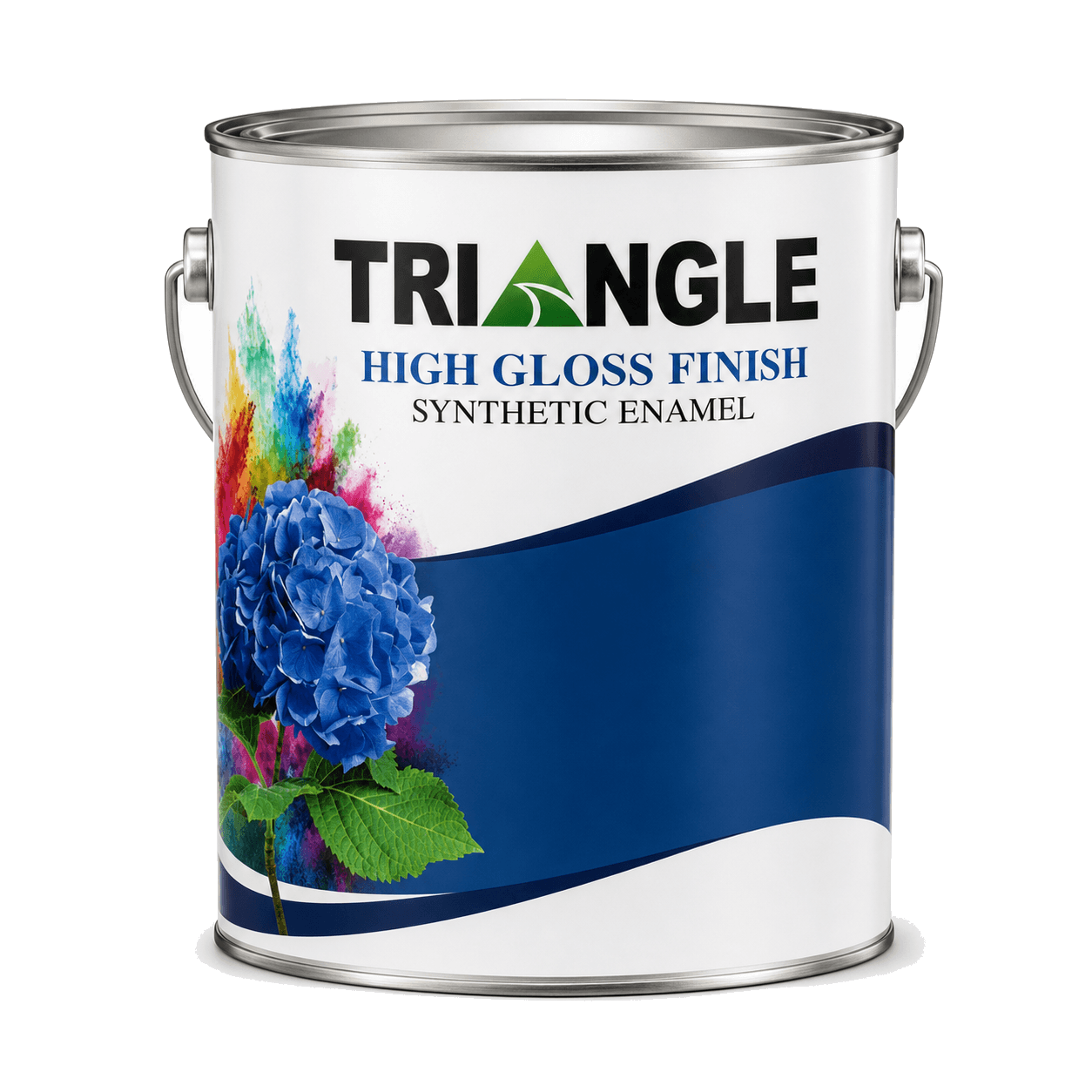
Supreme High Gloss Finish Synthetic Enamel
A superior high-gloss finish for suitably prepared wood and metal surfaces.
Gallon — 3.64 L · Quarter — 0.91 L · Dabbi — 250 ml / 10 oz packView product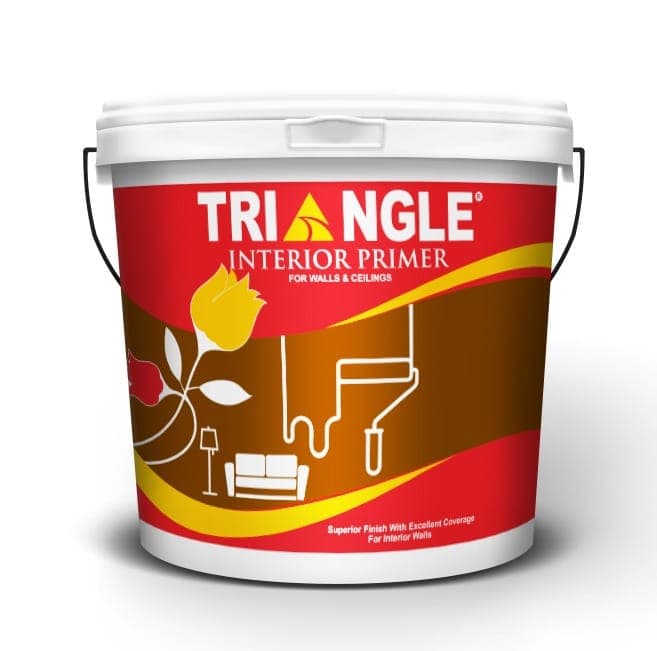
Interior Primer
A base coat for preparing interior walls before emulsion.
Ask about current pack sizesView productFind the right finish
Explore paints by project
Browse each range to compare products for your walls, surfaces and finish.
 05 products
Interior Paints
Refined finishes made for everyday Pakistani homes.
View range04 productsExterior Paints
Weather-conscious protection for exposed walls.
View range 02 products
Enamels
Durable colour for wood and metal surfaces.
View range 03 products
Primers & Undercoats
Preparation products for interior, exterior, wood and metal.
View range 04 products
Wall Preparation
A dependable foundation for a lasting finish.
View range